RSG ShippingRashed Al Suwaidi

FAQs

Frequently asked questions

Grouped by topic. These describe standard UAE procedure — the position for a specific consignment depends on the goods, the emirate and the authority involved.
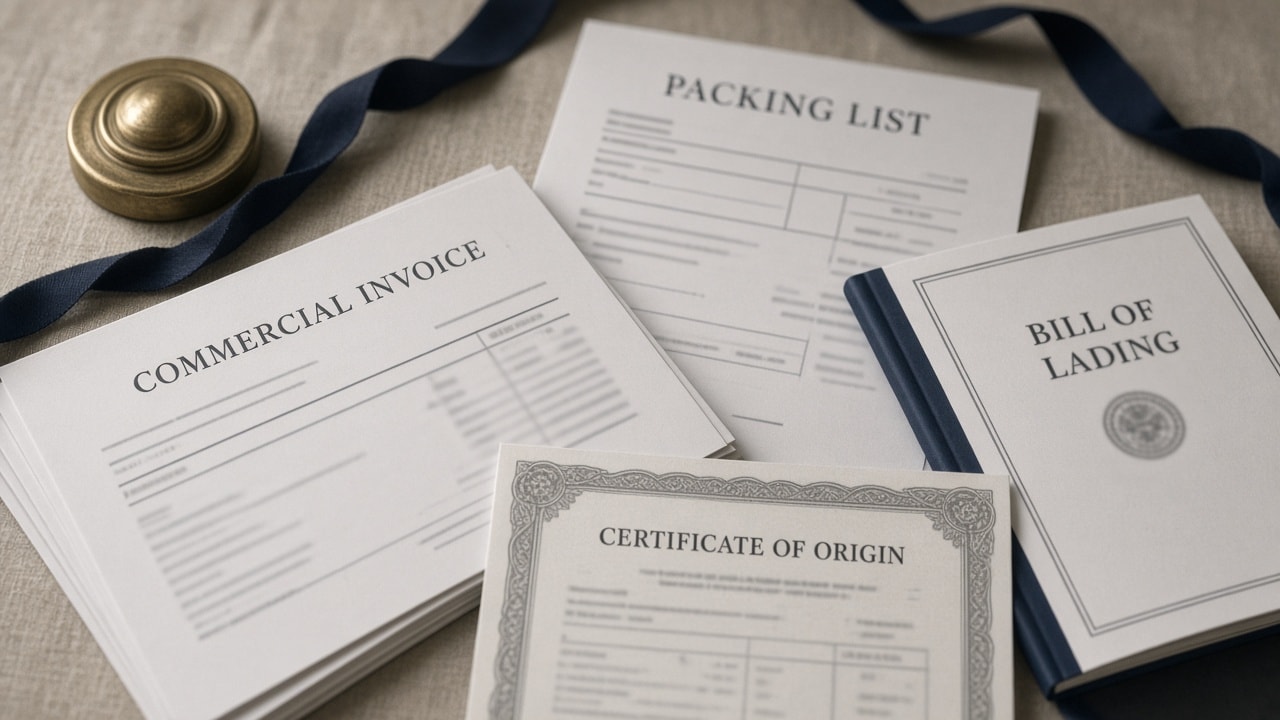
Commercial invoices, a packing list and a certificate of origin arranged on linen

Topic 1

Working with RSG Shipping

What we do, how an engagement starts, and where the boundaries of our service sit.

What areas of the UAE does RSG Shipping cover?
All seven emirates: Dubai, Abu Dhabi, Sharjah, Ajman, Ras Al Khaimah, Fujairah and Umm Al Quwain. Because declarations are administered by the customs authority of the emirate where goods arrive, and each emirate has its own ports, free zones and road access, we plan each shipment against its specific entry point and destination.
Is customs consulting the same as customs clearance?
No. Customs consulting decides how the rules apply: tariff classification, valuation, permits and the documents the declaration will need. Customs clearance is lodging that declaration and obtaining release. RSG Shipping does both, and keeps them as separate steps so the advice and the filing are not blurred into one vague promise.
What information do you need to quote a shipment?
A description of the goods, their origin and destination, gross weight and the dimensions of the largest piece, how they are packed, the required date, and the Incoterms rule agreed with your supplier or customer. For customs advice, a draft commercial invoice and packing list is usually enough to begin.
Do you work with one-off shipments or only ongoing contracts?
Both. A single shipment receives the same treatment as recurring work: the customs position established, the documents checked, the movement planned, and one point of contact throughout.
Do you replace my existing freight forwarder or broker?
Not necessarily. Where a supplier is working well, keeping them is usually the right answer and we coordinate them within the plan. Where a relationship is the source of recurring problems, we will say so and set out the alternative rather than working around it quietly.
Will you tell me if a shipment is not viable as described?
Yes. If the timeline cannot be met, the delivery point cannot receive the vehicle, a permit lead time makes the date impossible, or the documentation is not going to survive a customs check, that belongs in the quote rather than in a later apology.

Topic 2

UAE customs

General questions about how customs works in the UAE. These describe standard procedure; the position for a specific consignment depends on the goods, the emirate and the authority involved.

What is customs clearance in the UAE?
Customs clearance is the process of declaring goods to the customs authority of the emirate where they arrive, paying any duty and applicable VAT, satisfying inspection or permit requirements, and obtaining the release that allows cargo to leave the customs-controlled area. Declarations are lodged electronically, supported by the commercial invoice, packing list, transport document and certificate of origin.
What documents are required for customs clearance in the UAE?
For a standard commercial import, expect a commercial invoice, a detailed packing list, the transport document (bill of lading for sea, air waybill for air), a certificate of origin, the carrier's delivery order, and any import permit the goods require. The correct HS code and the importer's trade licence and customs registration details are also needed. The exact set depends on the commodity and the declaration type.
How does customs clearance work in the UAE, step by step?
In outline: the goods arrive and the carrier issues a delivery order; the declaration is prepared with the correct declaration type and HS codes and lodged electronically with the relevant emirate's customs authority; duty and any applicable VAT are assessed and settled; the consignment is either released or selected for inspection or query; once released, the cargo can be collected and moved. Permits for restricted goods must be in place before the declaration is processed.
Which customs authority handles my shipment?
The authority of the emirate where the goods physically enter. Dubai Customs, Abu Dhabi Customs and the Sharjah, Ajman, Ras Al Khaimah, Fujairah and Umm Al Quwain authorities each administer declarations for their own entry points, within the federal and GCC framework. This is why the port of arrival changes the practical process even though the underlying rules are national.
What is an HS code and why does it matter?
An HS code is the classification number that identifies your product under the Harmonised System, extended in the GCC Common Customs Tariff. It determines the duty rate, whether the goods are restricted, and what permits or standards approvals apply. Because a neighbouring heading can carry a different rate and different controls, a defensible classification is the single most consequential customs decision on most shipments.
What happens if customs holds my goods?
A hold usually reflects a document deficiency, a valuation or classification query, a missing permit, or selection for physical examination. The consignment remains in the customs area — where storage typically accrues — until the point is resolved. Resolution means identifying the specific reason and providing the evidence required, which is considerably faster where the classification and valuation reasoning was documented before shipping.
Do goods entering a UAE free zone pay customs duty?
Free zones are generally treated as outside the customs territory for duty purposes, so goods entering them are typically handled under a duty-suspension arrangement rather than cleared for local consumption. Duty becomes relevant when goods move into the mainland market. The precise treatment depends on the zone, the goods and what happens to them next, so it should be confirmed for your specific flow rather than assumed.
How much import duty is payable in the UAE?
Most goods attract customs duty at 5% of the CIF value — goods plus insurance plus freight to the port of entry — under the GCC Common Customs Tariff. Alcohol is charged at 50% and tobacco at 100% or a specific minimum, whichever is higher, while a number of tariff lines are duty-free. Import VAT of 5% is separate and is calculated on the customs value plus the duty, so the classification drives both figures.
Is VAT charged on imports into the UAE?
Yes. Import VAT is charged at 5% on the customs value plus the customs duty, so duty forms part of the VAT base. A VAT-registered importer can generally account for import VAT through its VAT return rather than paying it at the border, subject to the conditions in the VAT legislation and to the registration being correctly linked before arrival.
What is Mirsal 2?
Mirsal 2 is the electronic customs declaration system operated by Dubai Customs and accessed through the Dubai Trade portal. It is used to lodge declarations, settle duty and charges, and obtain customs release for consignments moving through Dubai. It is a Dubai system rather than a national one: Abu Dhabi uses ATLP, and Sharjah, Ras Al Khaimah, Fujairah, Ajman and Umm Al Quwain each run their own platforms.
Do I need a customs code to import into the UAE?
A declaration can only be lodged by a party registered with the customs authority of the emirate where the goods arrive, and that registration produces a business or importer code quoted on every declaration. Registration is normally built on a trade licence whose activities cover the trade concerned. Importers without a code appoint a registered clearing agent, but that does not transfer the importer's responsibility for the accuracy of the declaration.
Are 12-digit HS codes mandatory in the UAE?
The GCC Integrated Customs Tariff is structured to 12 digits and classifying to that level is good practice. Dubai Customs Notice 02/2026, issued on 30 January 2026, extends flexibility to file at 8 digits until further notice, so 8-digit declarations are not being rejected in Dubai on that basis. Because this is a notice that can be revised, check the current position before relying on either.

Topic 3

Freight and shipping

Mode choice, pricing bases and the contractual terms that decide who does what.

What is freight forwarding?
Freight forwarding is arranging the international transport of goods on behalf of a shipper: selecting the mode and routing, booking space with sea, air or road carriers, consolidating cargo where efficient, preparing transport documentation, and coordinating customs formalities at origin and destination. A forwarder generally does not own the vessels, aircraft or trucks — its value is in the arrangement and the documentation.
How do I choose between sea freight and air freight?
Sea freight costs substantially less per unit of weight and suits volume cargo that is not urgent, at the price of a longer transit. Air freight is much faster but is charged on chargeable weight — the greater of actual and volumetric weight — so bulky, light cargo becomes expensive quickly. For mid-value goods the decision usually turns on the cost of holding inventory in transit rather than on the freight rate alone.
What is chargeable weight?
In air freight, cargo is charged on the greater of its actual gross weight and its volumetric weight, which is derived from the shipment's dimensions using the industry volumetric divisor. Low-density cargo is therefore priced on the space it occupies rather than what it weighs, which is why accurate dimensions — not just weight — are needed for a meaningful air freight quote.
What is the difference between FCL and LCL?
FCL, full container load, means the container carries your cargo alone and moves without being opened en route. LCL, less than container load, means sharing a container with other consignments: cheaper for small volumes, but with additional consolidation and deconsolidation handling and a schedule tied to the wider consolidation. Above roughly half a container, FCL is usually worth pricing.
How do Incoterms affect my shipment?
Incoterms 2020 allocate who arranges and pays for carriage, where risk transfers, and who handles export and import clearance. Under FOB or FCA the buyer arranges the main carriage; under CIF or CFR the seller does, but risk transfers earlier than many buyers expect; under DDP the seller handles import clearance and charges; under EXW the buyer handles everything including export clearance. Agreeing a term without mapping it to the customs and transport process is a common source of dispute.
What shipping documents will I need?
At minimum a commercial invoice, a packing list and a transport document — a bill of lading for sea freight, an air waybill for air freight, or a consignment note for road. A certificate of origin is frequently required, particularly where a preferential duty rate is claimed. Product-specific certificates, permits and inspection certificates apply depending on the commodity and the destination market.

Topic 4

Transportation in the UAE

How road movements are planned, what needs a permit, and what actually determines transit time.

What is road transportation and when is it used?
Road transportation is the movement of goods by vehicle. Within the UAE it accounts for effectively all domestic freight, because the seven emirates are linked by a short, modern highway network and no domestic alternative is competitive. It also serves cross-border movements to neighbouring GCC markets through the land crossings.
What determines how long a UAE road movement takes?
Rarely the driving time. Port gate processing, customs release timing, free zone gate passes, heavy-vehicle route and timing restrictions in urban areas, and the receiving site's delivery window usually govern when cargo actually arrives. A credible plan is built around those factors rather than around a distance calculation.
Do oversized loads need a permit in the UAE?
Yes. Loads exceeding standard dimensional or weight limits require prior approval from the relevant road authority, and the approval can specify permitted routes, travel times and escort requirements. Dangerous goods movements are regulated separately. Both need lead time, so dimensions and weights should be confirmed at enquiry stage rather than on the day.
Can you deliver into free zones?
Yes. Free zone deliveries require the correct gate documentation and, where goods cross the free zone boundary, the appropriate customs treatment for that movement. Both are confirmed before dispatch, because a vehicle turned away at a free zone gate costs a day.
What is the difference between FTL and LTL?
FTL, full truck load, dedicates a vehicle to your consignment and runs direct, giving the fastest transit and the least handling. LTL, less than truck load, shares a vehicle with other consignments at lower cost but ties your timing to the wider route. On short UAE runs the cost gap is often narrower than expected, so FTL is worth pricing even for part loads.

Topic 5

Logistics planning and cost

The questions that come up when logistics stops being a series of one-off bookings.

What factors affect logistics costs in the UAE?
The main drivers are customs duty and the VAT treatment applicable to the goods, the mode and distance, the vehicle type a given cargo requires, handling and lifting at each end, storage or demurrage where cargo waits, permits for oversized or hazardous loads, and rework caused by documentation errors. The last is the most avoidable and frequently the largest.
How can businesses reduce shipment delays?
By removing the causes that are within reach: a defensible tariff classification, commercial documents that reconcile with each other, permits identified before the goods ship, transport arranged so it is ready the moment release is granted, and delivery windows confirmed with the receiving site. Vessel schedules, port congestion and inspection selection cannot be controlled, so they are planned for rather than promised around.
How can a business manage UAE logistics more effectively?
By fixing the recurring decisions rather than remaking them. That means a documented classification position for each product you import regularly, a standard document set checked for internal consistency, transport arranged in advance of release rather than after it, and a single party accountable for the handovers between legs. Most improvement comes from removing repeated errors, not from renegotiating rates.
Should I hold stock in a free zone or on the mainland?
It depends on your sales mix. A free zone can defer duty on goods that may be re-exported, which suits businesses serving markets beyond the UAE, but goods entering the local market still require a customs step. Mainland holding is simpler for purely domestic selling. The answer follows from your actual domestic-versus-export split, which is worth modelling rather than assuming.
What is 3PL and do I need it?
Third-party logistics usually means outsourcing warehousing, inventory handling and fulfilment to a provider operating those assets on your behalf. It suits businesses with steady volume and no wish to run a warehouse. It is a different proposition from coordination-led logistics, which manages the movement and the compliance without necessarily holding your stock — so the right choice depends on whether storage or coordination is your actual constraint.

Not answered here

Ask us directly

If your question is not covered, it is probably specific enough that a general answer would not help anyway.

For a shipment, request a quote — the form gathers what we need to answer properly. For anything else, contact us. For more depth on a topic, the guides go further and cite their sources.

Next step

Tell us what you need to move

Send us the shipment details and we will come back with the customs position, the transport plan and a price — or with the questions we need answered first.

  • No obligation, and no account setup required to get a quote
  • We say what we handle ourselves and what we would arrange for you
  • If a shipment is not viable as described, we will tell you that too
Request a quoteCallWhatsApp
WhatsApp