Industry
Logistics for Construction and Contracting in the UAE
Construction logistics is governed by the programme. Materials that arrive early congest the site; materials that arrive late stop it. The transport plan has to serve the sequence, not the other way round.
Quick answer
What does construction logistics involve in the UAE?
Construction logistics in the UAE involves importing plant, equipment and materials, obtaining any conformity or standards approvals those goods require, arranging permits for over-dimension and overweight movements, and delivering to site in the order the construction programme needs.
Site constraints usually dictate the plan: limited laydown area, restricted access hours, a single gate shared with other trades, and lifting equipment that is only available in defined windows. Deliveries are therefore scheduled to the programme and the site's capacity to receive, not to the convenience of the vehicle.
Contractors carry the cost of logistics failure directly. A delayed structural item can hold up a critical path activity; an early delivery with nowhere to go becomes double handling and damage risk. Neither shows up in a freight rate.
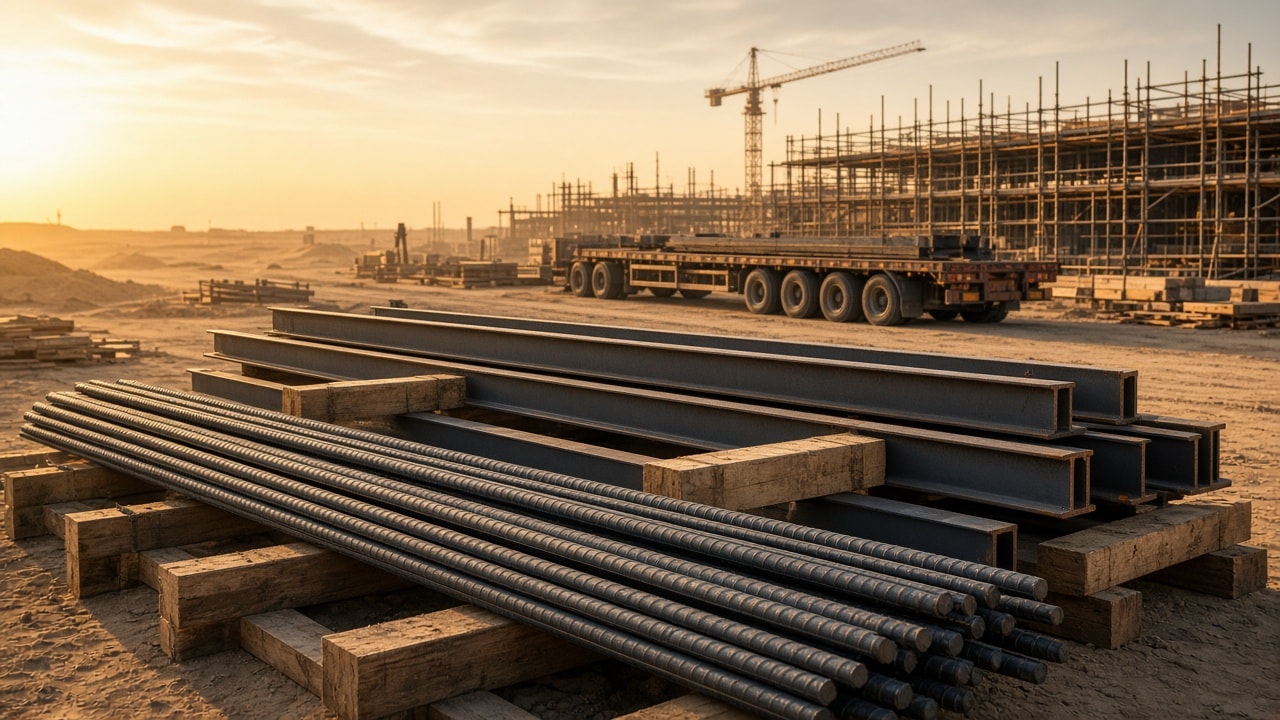
Construction cargo is also awkward by nature. Steel, precast elements, plant and modular units are heavy, long or both, which brings permits, route planning and lifting arrangements into scope. Many building products additionally require conformity assessment before they can be imported into the UAE.
We plan construction movements backwards from the site: what the receiving point can physically accept, when it can accept it, and what lifting is available. The customs and permit lead times are then built in ahead of that, rather than discovered against it.
Services most used
- Cargo transportationHandling planned around what the cargo is — palletised, containerised, oversized or sensitive.
- Road transportationRoad freight planning: the right vehicle, a workable route and the permits each load needs.
- Customs consultingAdvice on classification, valuation, permits and documentation before your goods move.
- Logistics solutionsOne coordinated plan across customs, transport and delivery instead of separate arrangements.
Sector requirements
What this sector needs from logistics
The characteristics that make this different from general freight, and that the plan has to account for.
- Programme-driven sequencing
- Deliveries scheduled against construction activities rather than procurement dates, so materials land when the trade that needs them is ready for them.
- Site access and laydown constraints
- Gate dimensions, permitted delivery hours, turning circles, available laydown area and whether the site can offload without vehicle-mounted equipment.
- Over-dimension and heavy movements
- Long, wide or heavy items need prior permits from the relevant road authority, and the approval can carry conditions on route, timing and escort. These lead times are not compressible.
- Conformity and standards approvals
- A range of building products and electrical items require conformity assessment or registration before import. Identifying which of your items are affected is a classification question answered before the order ships.
- Multi-origin consolidation
- Packages frequently arrive from several suppliers in several countries and must reach site as a coherent set. Missing one component of an assembly stops the installation as effectively as missing all of it.
- Documentation for handover and payment
- Delivery documentation, certificates and origin evidence often feed contractual milestones and payment applications, so the paperwork has to be complete, not just adequate for customs.
How we work with it
Where we add value
- Import position settled before the order ships
- Classification, duty treatment and any conformity or permit requirement identified at procurement stage, when supplier documentation can still be corrected.
- Permits handled as a lead-time item
- Over-dimension and overweight approvals treated as scheduled tasks with dates, not as something to arrange once the cargo has landed.
- Site-first delivery planning
- Access, offloading and delivery windows confirmed with the site team, and the vehicle and equipment selected to match what is actually available there.
- One point of contact across suppliers
- Movements from multiple origins coordinated on a single file so the set arrives together and exceptions surface in one place.
FAQs
Construction logistics — common questions
Do construction materials need special approval to import into the UAE?
How far in advance should over-dimension deliveries be planned?
Can you deliver to a site with restricted access hours?
What happens if the construction programme changes?
Related pages
Next step
Moving goods for a construction business?
Tell us the constraint you are working to and we will build the plan around it.
- No obligation, and no account setup required to get a quote
- We say what we handle ourselves and what we would arrange for you
- If a shipment is not viable as described, we will tell you that too